
What good pigeon management should deliver
Survey before proofing
We check where pigeons land, roost and nest so the right areas are protected.
Building-specific measures
Netting, spikes or exclusion are matched to the feature they are meant to guard.
Hygiene considered
Droppings and nesting material are part of the plan, not an afterthought.
Why pigeon activity keeps causing trouble
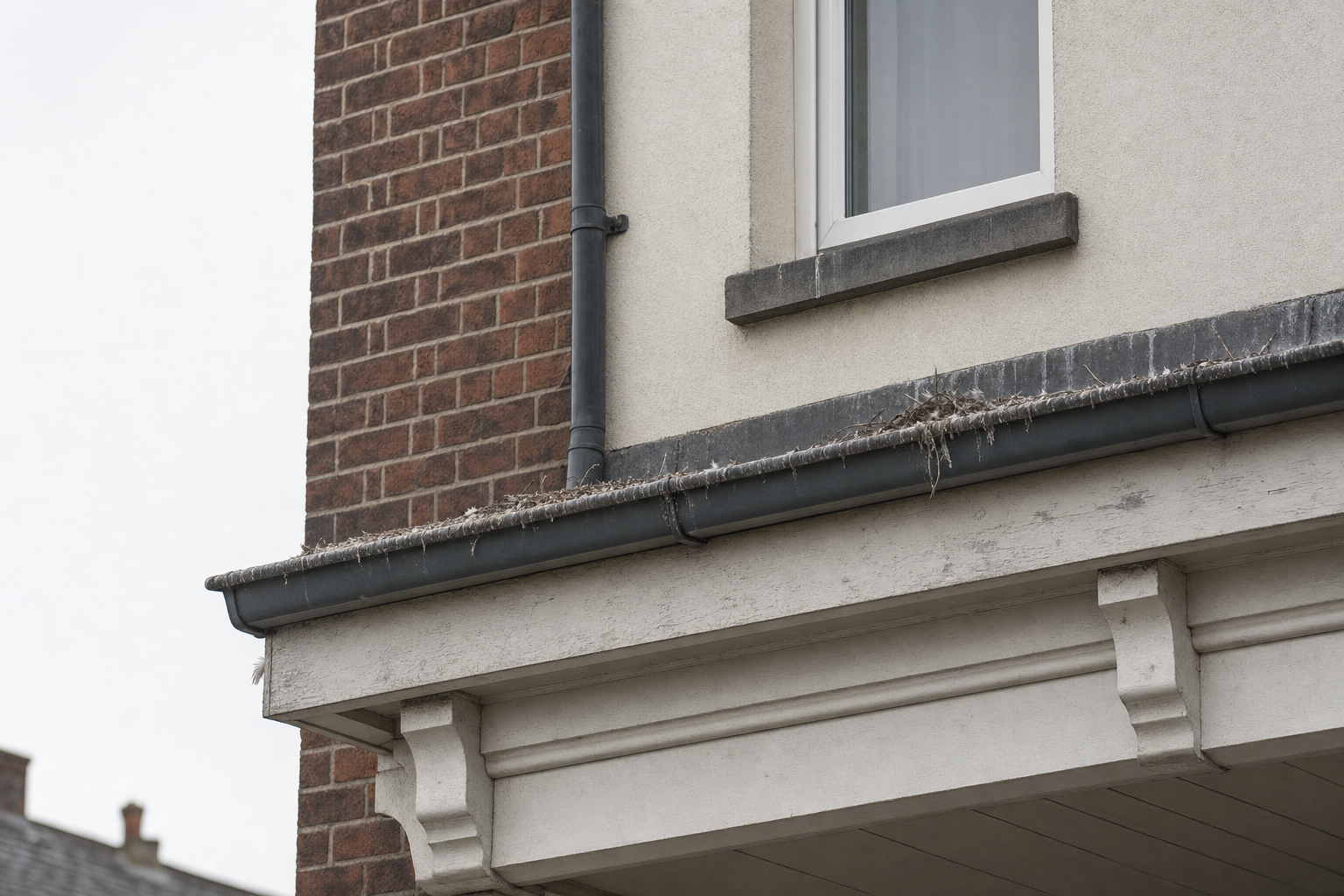
Pigeons become a bigger problem when they keep returning to the same roofline, ledge, canopy or gutter. Repeated roosting and nesting can lead to fouling, blocked rainwater routes, noise around roof spaces and wear to the building fabric. The longer droppings and nesting material are left in place, the harder the area can be to manage safely and cleanly. When you contact Impact Environmental Ltd, we start with a survey of roosting points, nesting areas and access routes so the control plan reflects the way the birds are using the property. In Derby, that helps households and commercial sites protect the parts of the building most at risk.

Proofing that suits the building feature
Different parts of a building need different forms of proofing. Netting may be suitable for larger voids or sheltered sections, spikes can help discourage landing on specific ledges, and access exclusion can protect openings where birds are getting in. We also consider the hygiene implications of heavy fouling and nesting material so the wider plan is not just about moving birds on. Successful pigeon management usually relies on lawful control combined with steps that reduce the chance of the same spot being used again, which is why survey work matters before any proofing is chosen.
Frequently asked questions
Why do pigeons keep returning to the same spot?
Pigeons favour places that feel sheltered, stable and easy to reach. If a ledge, roof section or gutter keeps giving them that chance, they will often return. Lasting results usually depend on proofing the access or resting point they rely on.
Which proofing method is right for my building?
That depends on the part of the structure being protected and how the birds are using it. A survey helps us match the control measure to the ledge, roof edge, opening or sheltered area instead of using a one-size approach.
Do droppings need dealing with as part of control?
Often, yes. Heavy fouling and nesting material can create hygiene concerns and make a building feature more difficult to manage. We take those conditions into account when planning pigeon control so the problem is addressed as a whole.